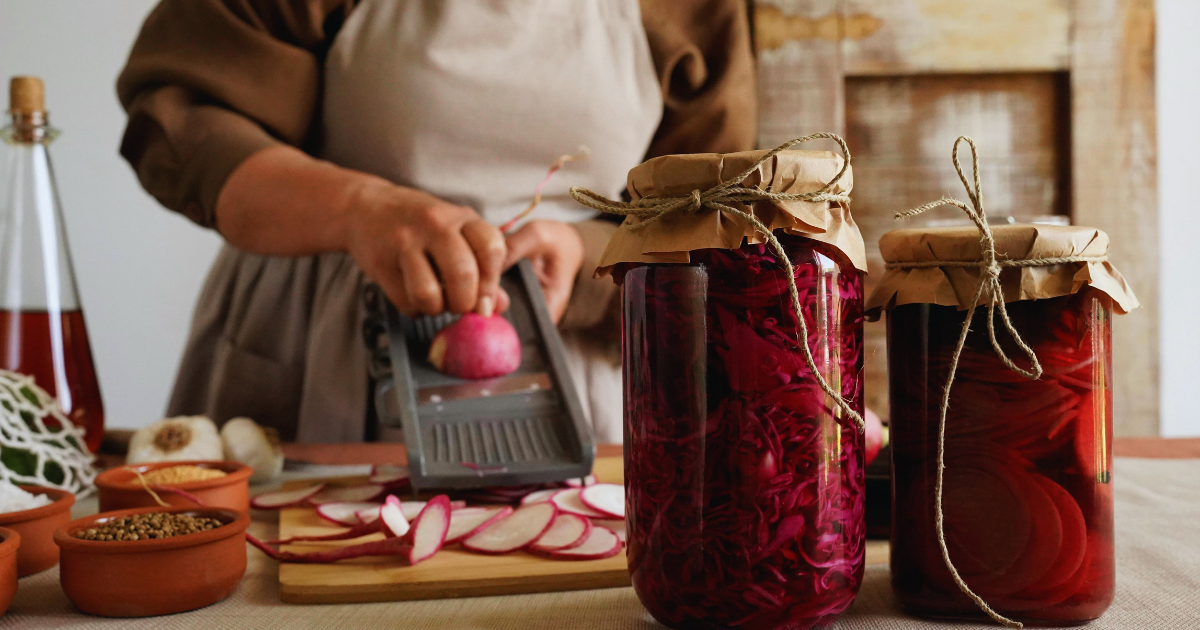
There’s a particular kind of person in your life. You know the one. They’ve turned a corner of the kitchen into what looks like a science lab. Mason jars line the counter, each labeled with mysterious dates. The fridge smells faintly of garlic, vinegar, and something they keep calling “the mother.” They’ve offered you kombucha they brewed themselves and watched your face intently as you took the first sip.
This post may contain affiliate links, which means if you make a purchase from any of these links, we do make a small commission at no cost to you.
This guide is for shopping for that person.
Generic gift guides will tell you to buy them a crock or a “fermentation starter kit” and call it a day. But anyone who’s been fermenting longer than a few months already owns those things, and probably has strong opinions about which brands are worth the money. What follows is a gift guide built from the ground up around what fermenters actually want at different stages of the obsession, from the curious beginner who just made their first batch of sauerkraut to the lacto-fermenting, koji-growing, miso-aging zealot who’s running out of basement space.
How to Use This Guide
The hardest part of buying for a fermentation hobbyist isn’t finding something interesting, it’s avoiding duplicates. Before you buy, try to gently figure out:
- What do they ferment most? Vegetables, dairy, beverages, grains, fish sauces, or hot sauces all need different equipment.
- How long have they been at it? Six months versus six years is the difference between needing basics and needing specialty gear.
- Do they have space? Some fermenters live in apartments and need compact gear. Others have dedicated rooms.
With those answers in mind, here are the gifts that will actually make them light up.
For the Vegetable Fermenter (Sauerkraut, Kimchi, Pickles)
1. A weighted glass fermentation kit with airlock lids: The single biggest upgrade from a plain mason jar. Glass weights keep vegetables submerged below the brine (critical for preventing mold), and airlock lids let CO2 escape while keeping oxygen out. Look for sets that fit wide-mouth mason jars since that’s what most fermenters already own.
2. A traditional Korean onggi pot: For the kimchi-obsessed friend, an authentic earthenware onggi is a meaningful upgrade. These porous clay pots “breathe,” allowing micro-oxygen exchange that produces deeper, more complex fermentation than glass or plastic. They’re also stunning kitchen objects.
3. A high-quality vegetable mandoline: Consistency in cut size means consistency in fermentation. A good mandoline with a julienne blade transforms cabbage prep from a 20-minute slog into a 3-minute task. Look for one with a sturdy hand guard, fermenters cut a lot of vegetables.
4. A cabbage shredder (kraut board): For the serious sauerkraut maker, a traditional wooden kraut board is the next-level tool. They produce ribbons of cabbage faster than any knife or mandoline and have a beautiful old-world look that fermentation people tend to love.
5. Fermentation-grade sea salt in bulk: This sounds boring. It isn’t. Most fermenters get frustrated buying small containers of pickling or non-iodized salt at premium prices. A 5-pound bag of high-quality, mineral-rich Celtic, Redmond Real Salt, or Korean cheonilyeom (solar sea salt) is a genuinely useful gift that lasts months.
For the Kombucha and Water Kefir Brewer
6. A continuous brew vessel with spigot: Most kombucha hobbyists start with the batch method (one jar at a time) and eventually want to move to continuous brewing. A 2.5 to 5-gallon glass vessel with a stainless steel spigot lets them draw off finished kombucha while leaving the SCOBY undisturbed. Game-changing gift.
7. Flip-top swing bottles for second fermentation: Grolsch-style bottles with rubber gaskets are essential for carbonating kombucha. A set of 12 to 16 in 16-ounce sizes covers most home brewers. Bonus points for getting amber or cobalt glass, which protects from light exposure.
8. A pH meter or digital pH testing kit: Once a fermenter gets past the beginner stage, they start caring about precision. A digital pH meter (calibrated, not the cheap strip kind) lets them dial in exactly when their kombucha is ready, and prevents the dreaded vinegar-batch.
9. A heating mat with thermostat controller: For anyone fermenting in a cool apartment or basement, temperature is the difference between success and a stalled batch. A seedling-style heating mat paired with an inkbird-style thermostat keeps brews in the sweet spot year-round.
10. Specialty tea sampler for kombucha experimentation: Most kombucha brewers default to plain black tea forever. A curated sampler of loose-leaf oolongs, white teas, green teas, and pu-erhs opens up entirely new flavor territories. Avoid teas with added oils or flavorings, they can damage the SCOBY.
For the Sourdough and Grain Fermenter
11. A digital scale with 0.1g precision: Most kitchen scales are accurate to 1 gram, which is fine for cooking but imprecise for sourdough hydration math. A scale that measures to 0.1g, and has a tare function, is the kind of small upgrade serious bakers obsess over.
12. A banneton (proofing basket) set: Traditional rattan or cane proofing baskets give sourdough loaves their characteristic spiral pattern and help maintain structure during the final rise. A round and an oval together cover most loaf shapes.
13. A bread lame with replaceable blades: Scoring is the most photogenic part of sourdough, and a proper lame (pronounced “lahm”) with sharp, curved blades produces dramatically better ear and oven spring than a kitchen knife.
14. A Dutch oven specifically for bread: If they don’t already have one, a heavy enameled cast iron Dutch oven is the home baker’s secret to bakery-quality crusts. The trapped steam in the first half of baking creates the crackling crust that’s nearly impossible to achieve on an open baking stone.
15. A copy of Tartine Bread by Chad Robertson or Flour Water Salt Yeast by Ken Forkish: These two books are the foundational texts of modern home sourdough. If they have one, get them the other.
For the Dairy Fermenter (Yogurt, Kefir, Cheese)
16. A yogurt incubator or sous vide setup: The Instant Pot has a yogurt setting that many people use, but a dedicated incubator (or a sous vide circulator with a deep container) gives much more precise temperature control. Critical for thermophilic cultures and Greek-style strained yogurts.
17. Heirloom kefir grains from a reputable source: Most store-bought “kefir starter” is a powdered, single-use culture. Real milk kefir grains are a living symbiotic colony that lasts indefinitely. A small bag of fresh, active grains from a trusted seller is a gift that, with care, can last a lifetime.
18. A cheese-making starter kit: For the fermenter who wants to expand into cheese, a 30-minute mozzarella and ricotta kit (with citric acid, rennet, and instructions) is a delightful entry point. From there, The Art of Natural Cheesemaking by David Asher is the next-level reading.
19. A nut milk bag or fine cheesecloth set: Indispensable for straining Greek yogurt, labneh, ricotta, and soft cheeses. Most fermenters fight with flimsy supermarket cheesecloth, a sturdy mesh nut milk bag is a small luxury that gets used constantly.
For the Advanced or Adventurous Fermenter
20. A copy of The Noma Guide to Fermentation by René Redzepi and David Zilber: This is the book. It’s the gift that signals you understand the obsession. It covers lacto-fermentation, kombucha, vinegars, misos, shoyus, garums, and koji in a level of depth that takes home fermenters years to work through. If they already own it, get them Koji Alchemy by Jeremy Umansky and Rich Shih instead.
21. A koji incubation chamber or DIY koji kit: Koji (Aspergillus oryzae) is the gateway to miso, shoyu, amazake, sake, and a whole world of umami. A starter pack of koji spores plus a small incubator (or an instructional book on hacking one together with a cooler and a heating pad) is the gift that opens an entire new continent of fermentation.
22. A garum or fish sauce making kit: Garum, the ancient Roman fermented fish sauce, has been resurrected by chefs like Redzepi. A small ceramic crock plus a copy of garum-focused chapters is the kind of bizarre, niche gift that hardcore fermenters genuinely love.
23. A vacuum sealer: For lacto-ferments without brine, sous vide-style fermentation, and koji aging, a vacuum sealer is transformative. The Anova or smaller chamber sealers from companies like VacMaster are the steps up from cheap clamshell models.
24. A miso aging crock with a fermentation weight: Long-aged miso (12+ months) is one of the great pleasures of advanced fermentation. A proper Japanese-style miso crock with a wooden lid and a heavy stone weight is both functional and beautiful.
For Anyone, at Any Level
25. A subscription to a fermentation magazine or course: Fermentation Magazine (from Mother Earth News) and online courses from teachers like Sandor Katz or Kirsten Shockey are gifts that keep arriving. For the truly serious, a workshop weekend at a fermentation school is a memorable experience.
26. A copy of The Art of Fermentation by Sandor Katz: If they only own one fermentation book, this should be it. It’s less recipe collection and more an encyclopedic, philosophical reference. It’s the book most fermenters cite as the one that radicalized them.
27. A “fermentation library” custom labels set: Sounds small, but the chronic problem in every fermenter’s life is forgetting which jar was started when. A set of dissolvable, writable labels (or a quality chalk marker plus chalkboard-style mason jar labels) solves a daily frustration in the most useful way possible.
Fermentation people aren’t easy to shop for because their hobby is layered. The right gift signals that you’ve actually paid attention to what kind of fermenter they are, vegetable-curious, kombucha-obsessed, sourdough-deep, or fully down the koji rabbit hole. Pick from the right section above and you’re not just giving a thoughtful gift; you’re giving them permission to go even deeper into the thing they already love.
And honestly? Next time they offer you a strange cloudy beverage from a jar, take a sip. You might be surprised.